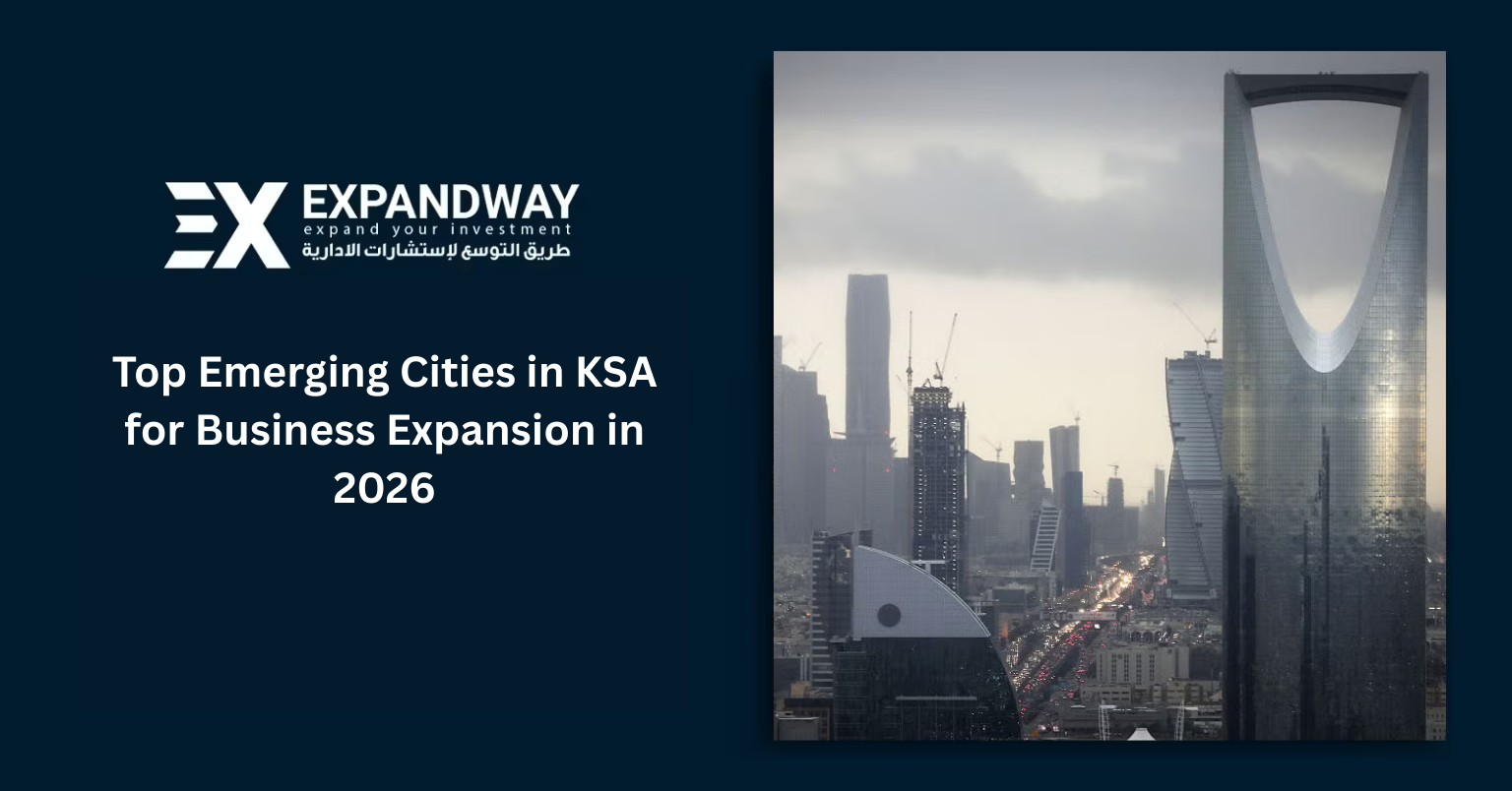
Top emerging cities in KSA 2026 are transforming Saudi Arabia’s business landscape under Vision 2030, driven by foreign direct investment growth and large-scale mega projects.
Saudi Arabia is entering a critical growth phase in 2026, powered by Vision 2030, rising foreign direct investment , and large-scale infrastructure and megaprojects. For entrepreneurs, SMEs, and multinational companies, choosing the right city has become a strategic decision that directly impacts licensing speed, operating costs, talent access, and scalability.According to the latest Perplexity-compiled research, four cities clearly stand out as the top emerging hubs for business expansion in KSA in 2026: Riyadh, Jeddah, Dammam & Al Khobar, and NEOM
This guide breaks down why these cities matter, which industries benefit most, and how investors can position themselves for early-mover advantage.
- Why 2026 Is a Turning Point for Business Expansion
- 1. Riyadh – The Economic & Corporate Headquarters Capital
- 2. Jeddah – Trade, Tourism & Logistics Gateway
- 3. Dammam & Al Khobar – Industrial & Energy Powerhouse
- 4. NEOM – Future-First Innovation & Technology Hub
- How to Choose the Right City for Your Business
- Conclusion: Position Early for Maximum Advantage
- Call to Action
Why 2026 Is a Turning Point for Business Expansion
Saudi Arabia’s economic strategy has shifted decisively toward non-oil growth, private-sector participation, and global competitiveness.
Key drivers shaping 2026 include:
- Vision 2030 diversification policies
- 100% foreign ownership in key sectors
- Simplified MISA licensing processes
- Strong non-oil FDI growth (44% net inflow increase as of Q1 2025)
- Massive government-backed megaprojects
These reforms have transformed several Saudi cities into industry-specific growth hubs rather than one-size-fits-all locations.
1. Riyadh – The Economic & Corporate Headquarters Capital
Riyadh remains the undisputed leader for large-scale and compliance-driven business expansion.
Why Riyadh Leads in 2026
- SAR 238.9 billion FDI stock (2022), the highest in KSA
- Home to the Regional Headquarters (RHQ) Program
- Direct proximity to ministries and regulators
- Strong ecosystem for finance, real estate, and tech
Best-Fit Industries
- Multinational HQs
- Fintech & financial services
- Gov-linked contractors
- SaaS, AI, and enterprise technology
Riyadh Tech Valley, metro expansion, and King Salman Park are accelerating demand across real estate, digital services, and infrastructure.
Best for: Corporations, regulated industries, and businesses requiring fast approvals.
2. Jeddah – Trade, Tourism & Logistics Gateway
Jeddah offers a cost-efficient alternative with strong access to trade routes and religious tourism.
Why Jeddah Is Strategic
- Coastal access and major seaports
- Gateway to Makkah tourism economy
- Lower office costs than Riyadh
- Strong retail and hospitality demand
High-Growth Opportunities
- E-commerce fulfillment
- Hospitality & retail brands
- Import/export businesses
- Mixed-use real estate
Developments such as Jeddah Tower and waterfront zones are improving long-term commercial yields, especially in areas like Obhur.
Best for: SMEs, traders, logistics companies, and tourism-focused ventures.
3. Dammam & Al Khobar – Industrial & Energy Powerhouse
The Eastern Province, led by Dammam and Al Khobar, anchors Saudi Arabia’s energy, manufacturing, and logistics economy.
Why the Eastern Province Matters
- Proximity to Aramco and GCC ports
- Established industrial zones
- Strong demand for engineering and trade services
- 6–8% real estate yields in commercial hubs
Ideal Business Types
- Manufacturing & engineering firms
- Energy-linked services
- Industrial trading companies
- B2B logistics operators
Al Khobar’s urban expansion is also driving retail and commercial property growth.
Best for: Industrial businesses and energy-sector suppliers.
4. NEOM – Future-First Innovation & Technology Hub
NEOM represents Saudi Arabia’s most ambitious economic experiment, backed by a $500 billion megaproject vision.
What Makes NEOM Unique
- Focus on AI, robotics, and green energy
- Projects like The Line and Oxagon
- Specialized economic zones
- Strong foreign capital incentives
NEOM is positioned as a first-mover destination for innovative companies targeting future industries rather than traditional markets.
High-Potential Sectors
- Artificial intelligence
- Renewable energy
- Smart mobility
- Advanced manufacturing
Best for: Startups, deep-tech firms, and innovation-driven investors.
How to Choose the Right City for Your Business
When expanding into Saudi Arabia in 2026, align your city choice with:
- Business size (SME vs enterprise)
- Industry regulations
- Budget and operating costs
- Target market access
- Talent and infrastructure needs
Quick Decision Guide
- Riyadh: Corporate HQs & compliance-heavy sectors
- Jeddah: Trade, tourism & SMEs
- Dammam / Al Khobar: Industrial & energy businesses
- NEOM: Tech innovation & future industries
Conclusion: Position Early for Maximum Advantage
Saudi Arabia’s transformation is no longer theoretical; it is actively reshaping where and how businesses succeed. Companies that enter the right city early gain licensing speed, cost advantages, and long-term scalability.
With Vision 2030 momentum, rising FDI, and city-specific incentives, 2026 is the ideal year to expand into KSA provided you choose the city that aligns with your growth strategy.
Call to Action
👉 Planning to expand your business into Saudi Arabia?
Speak with our experts to compare setup costs, licensing requirements, and city-specific incentives before you invest.