
Saudi Company Formation Process: From Preparation to Operations
Updated 14 October 2026.
Company formation involves several connected stages. Plan the activity, applicant category, documents, registrations and operating requirements together so that incorporation is followed by practical readiness.
The company formation sequence
- Confirm the proposed business activity and ownership route.
- Choose the legal structure and prepare the shareholder or parent-company file.
- Confirm document certification and translation requirements.
- Complete the applicable investment registration and incorporation steps.
- Obtain commercial registration and any necessary operating approvals.
- Coordinate premises, banking, tax and employer requirements.
Prepare before you submit
Use the MISA requirements guide and company registration document checklist to organize the filing. Resolve activity and ownership questions before ordering document services.
Choose a branch or separate company
Compare the branch and LLC structures against the parent company’s operating needs, liability and future ownership plans.
Budget beyond incorporation
The business setup cost guide separates government charges, professional services, documents and recurring operating commitments. Obtain a written scope for the work you need.
Operational readiness after registration
Company registration is followed by the tasks needed to invoice, employ people and run the business. Use the first-30-days checklist to coordinate those tasks with the responsible teams.
Activity selection shapes the rest of the file
Start with the business model the Saudi operation will actually use. Identify whether it will provide services, sell goods, carry out regulated work or perform another activity. The activity review should precede a choice based only on a low advertised fee or a short timeline. Keep the proposed operations, ownership and intended location in one briefing document for the setup team.
Prepare the parent-company and shareholder information together
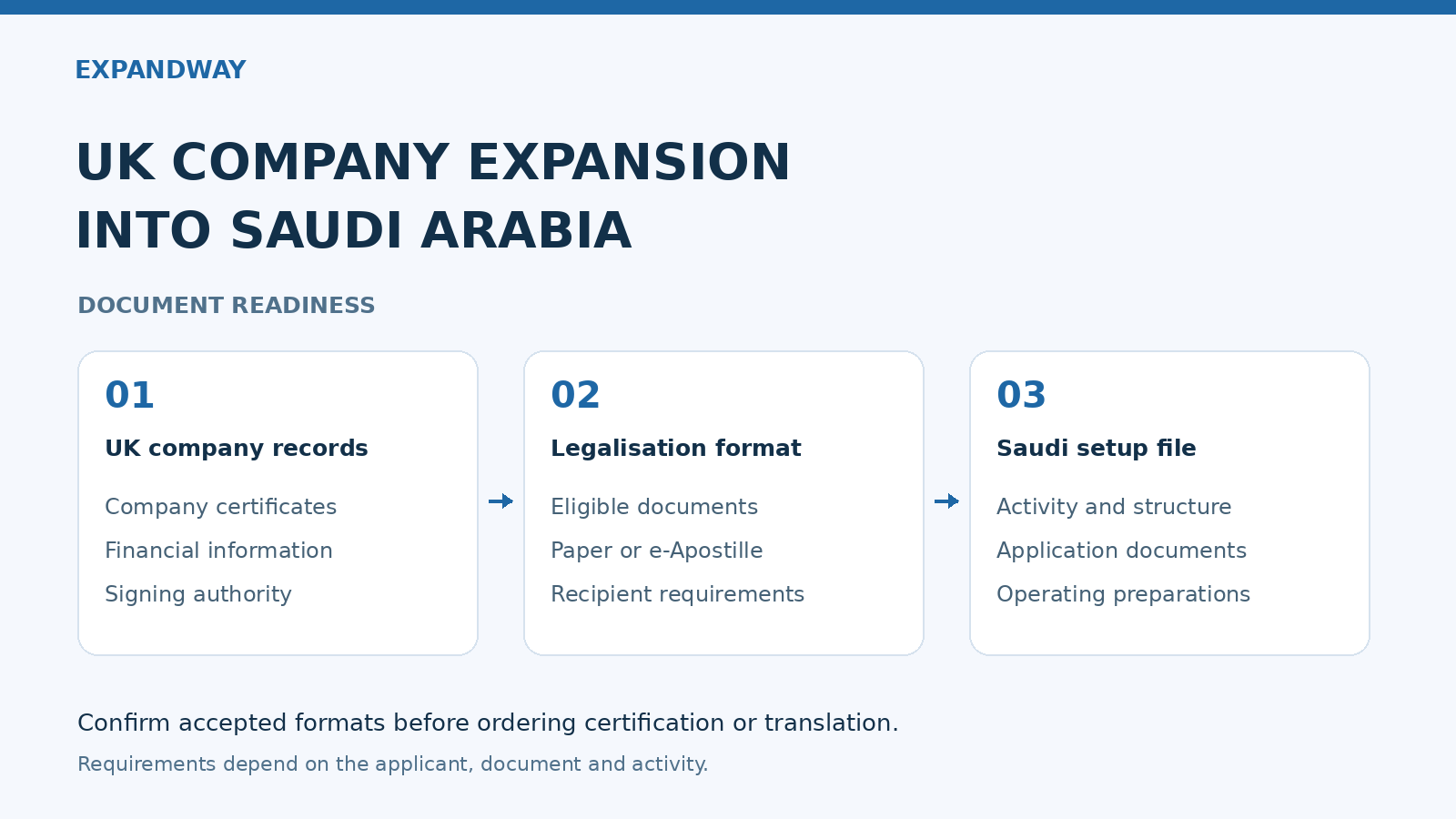
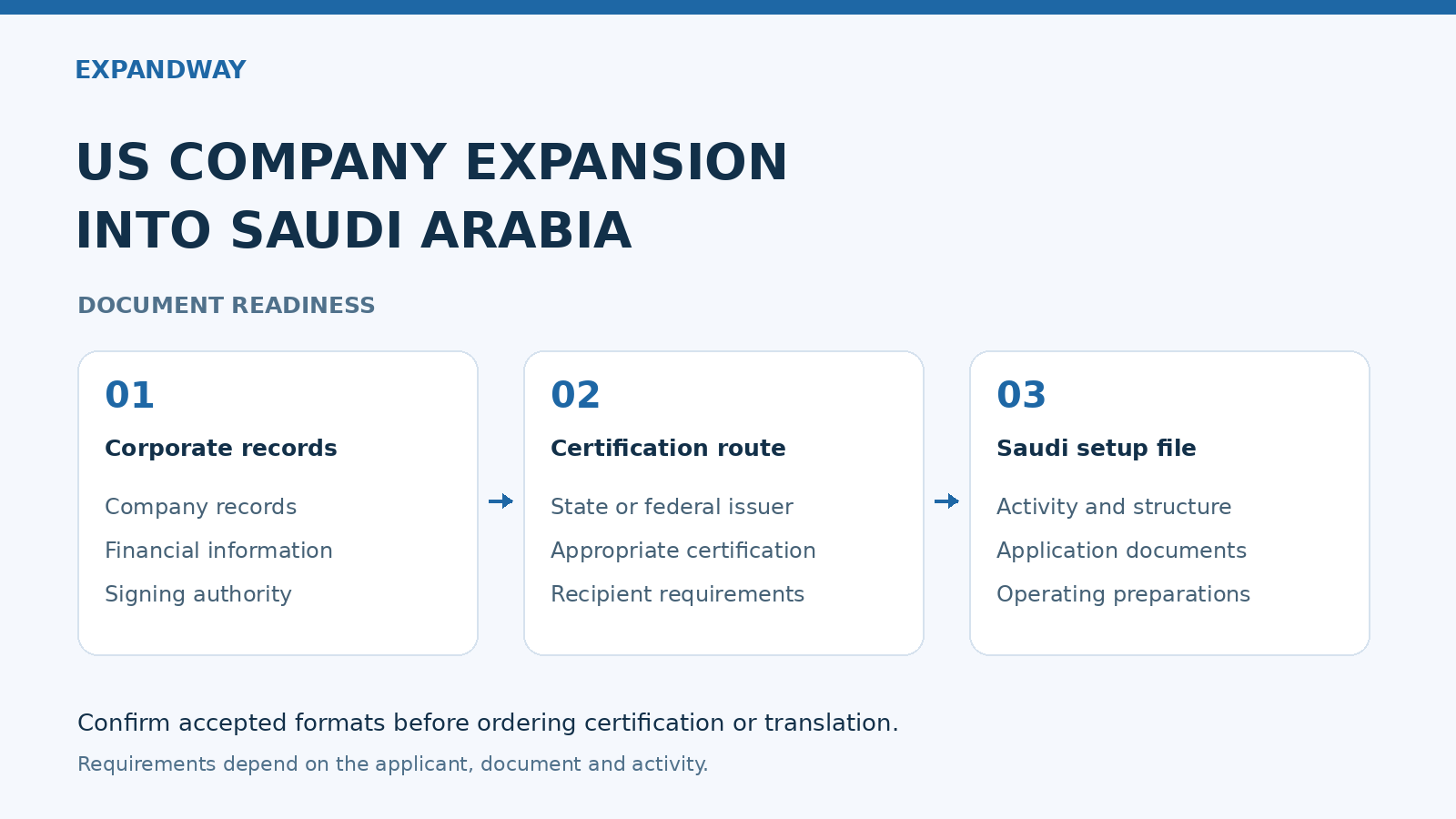
The shareholder file and the authority of the representative should support the chosen structure. Collect the relevant company records, financial evidence and signing approvals, then confirm which format the receiving authority accepts. Do not assume that the same certification or translation route applies to every document or every applicant category.
Separate incorporation from operating permission
Company incorporation creates the legal structure, while the activity may have additional operating requirements. Review the approvals that apply to the actual work and the premises. Assign a responsible person to each task so that a completed registration is followed by an organized operating plan.
Use one coordinated budget
An itemized budget should distinguish government charges, professional services, document work, premises and ongoing commitments. Business capital is a separate funding question where relevant. Check that the proposed scope explains what is included, what the company must arrange itself and which obligations arise after establishment.
Prepare the bank and management file early
Discuss onboarding expectations with the selected bank and the person who will manage the Saudi operation. Identify the ownership, representative and company records the bank requests, and keep those details consistent with the incorporation file. Account opening has its own assessment and should have a separate readiness check.
What should happen in the first month after registration?
Assign ownership of company records, official contact details, portal access and required filings. Review the staffing and bookkeeping arrangements needed for the intended activity. Maintain a calendar of updates and other recurring obligations rather than treating the initial registration as the end of the project.
Plan your Saudi setup with Expandway
Get an activity-specific eligibility, document and cost check before committing to your setup. Explore our company formation services in Saudi Arabia support, or request a business setup consultation. Government charges are paid to the relevant authorities separately from Expandway’s professional service fee.