Here is how to open a medical clinic in Saudi Arabia in 2026: you need a Commercial Registration from the Ministry of Commerce, a health-facility licence from the Ministry of Health (MOH) issued through its Seha platform, and if you are a foreign investor a MISA investment registration first. On top of the premises licence, every doctor and nurse who treats patients must hold a professional classification from the Saudi Commission for Health Specialties (SCFHS). A fully foreign-owned clinic usually opens in around three to six months, once documents are attested, the premises pass inspection and your clinical staff are licensed.
That is the short version. The steps are well defined, but they run across several authorities at once, so the detail below keeps the process on schedule whether you are one physician opening a single consulting room or a group launching a multi-specialty centre.
Private healthcare is one of the clearest Vision 2030 growth stories: care is shifting toward the private sector and demand for clinics is climbing. The opportunity is real, but health facilities are regulated closely so getting the sequence right matters.
The licences you need for a clinic
Think of your healthcare business licence in Saudi Arabia as a stack of approvals rather than a single certificate. For a standard outpatient clinic, these are the pieces that have to line up.
| Approval | Authority | What it does |
|---|---|---|
| MISA investment registration | Ministry of Investment (MISA) | Lets a foreign investor own the clinic (needed before the CR) |
| Commercial Registration (CR) | Ministry of Commerce | Your core trading licence; unlocks everything else |
| Municipal site approval | Ministry of Municipalities and Housing (Balady) | Confirms the premises is zoned and suitable for a clinic |
| Health-facility licence | Ministry of Health (MOH), via the Seha platform | The MOH clinic licence that lets the facility treat patients |
| Professional classification | Saudi Commission for Health Specialties (SCFHS) | Licenses each doctor, nurse and technician to practise |
| CBAHI accreditation | Saudi Central Board for Accreditation of Healthcare Institutions | National quality accreditation; required to renew your MOH licence |
| Medicines & devices | Saudi Food and Drug Authority (SFDA) | Rules for any pharmacy, medicines or regulated devices you keep |
| VAT & e-invoicing | ZATCA | 15% VAT once turnover passes SAR 375,000 |
| Social insurance | GOSI | Register your staff |
MOH and MISA approvals: how the clinic licence works
Two approvals define the project: MISA lets a foreigner own the business, and the MOH licence lets the facility treat patients.
MISA registration (foreign investors)
If you are not Saudi or GCC, your first stop is the Ministry of Investment (MISA). Healthcare is an open activity, so a foreign investor can own 100% of a clinic with no local partner. Since the 2025 Investment Law, MISA issues an investment “registration” rather than the old “licence,” though many people still say “MISA licence.” There is no fixed minimum capital set for most clinic activities, but MISA and your bank will expect enough working capital to fit out and run the clinic credibly. Confirm your activity and any conditions with MISA or Expandway.
The MOH health-facility licence
The Ministry of Health licenses the facility itself through its electronic health-licences system, the Seha platform (seha.sa). Before you apply, three things must be in place: your Commercial Registration, municipal site approval for the premises, and proof of the property — a title deed or a long lease. MOH then works in stages: you submit the establishment application with ownership documents, obtain “cadre” (staffing) approval from the local Directorate of Health Affairs, and finally pass an on-site inspection.
For a single medical clinic the bar is light — it must be owned or supervised by a specialised, SCFHS-classified physician and have at least one nurse, and MOH aims to issue the clinic licence within about five working days of a clean inspection. A multi-specialty polyclinic needs at least three specialties and takes longer. You will also name a medical (technical) director who is an SCFHS-classified physician; for some facility categories MOH expects this supervisor to be a Saudi national, so confirm the rule for your activity.
Licensing your doctors and nurses (SCFHS)
Your premises licence is only half the picture. Every clinician who treats patients needs their own medical licence in KSA, which is their SCFHS professional classification. Applications run through the SCFHS Mumaris Plus platform and follow a set path: DataFlow primary-source verification of degrees and experience (usually the longest step, at six to twelve weeks), the Saudi Licensing Exam through Prometric, and a classification committee that grades each professional as Resident, Specialist or Consultant. Board-certified doctors from the US, UK, Canada and Australia/New Zealand may be exempt from the exam. Plan on roughly four to seven months per clinician with help — this, not the building work, is usually the long pole in the timeline.
How to open a medical clinic in Saudi Arabia: the 7 steps
- Choose your activity, location and structure. Fix your specialties and a compliant, well-zoned site — both drive your MISA category and MOH requirements.
- Get MISA investment registration (foreign investors). Register with the Ministry of Investment first; it is the gateway that lets a non-Saudi own the clinic.
- Reserve the name and get your CR. The Ministry of Commerce issues your Commercial Registration; add Chamber of Commerce membership.
- Secure premises and municipal approval. Sign the lease or deed, register the national address, and get the municipal site sign-off MOH will check.
- License your clinical team (SCFHS). Start DataFlow and Mumaris Plus early for every doctor, nurse and technician — this runs in parallel and takes the longest.
- Apply for the MOH facility licence on Seha. Submit ownership and staffing documents, clear cadre approval, then pass the on-site inspection.
- Register with ZATCA and GOSI, then open. Set up VAT and e-invoicing, enrol staff for social insurance, add SFDA steps for any pharmacy or devices, and open your doors.
Facility requirements
MOH and the municipality both care about the physical clinic, so build compliance into your fit-out rather than retrofitting it later. In practice a clinic needs:
- A suitable, well-zoned location with municipal approval and a title deed or long lease (commonly around 15 years for larger facilities).
- A clinical layout that meets MOH standards adequate consulting and treatment rooms, hand-hygiene and infection-control provisions, and safe medical-waste handling.
- Fire and safety approval from Civil Defense, which feeds into your municipal and MOH sign-off.
- Minimum staffing: for a single clinic, an SCFHS-classified specialist owner or supervisor plus at least one nurse; larger centres need registrar physicians by specialty.
- SFDA compliance for any in-house pharmacy, stored medicines or regulated medical devices.
CBAHI accreditation
CBAHI the Saudi Central Board for Accreditation of Healthcare Institutions sets the national quality standard, and its accreditation is mandatory for healthcare facilities, including clinics and primary-care centres. New facilities are surveyed after they have been operating for about 12 months, and accreditation becomes a prerequisite when you renew your MOH licence. In plain terms, you can open on your MOH licence, but you must reach CBAHI standards to stay open so design your policies, records and safety systems to CBAHI from day one.
What it costs
Government and licensing fees for a clinic are modest; the real spend is fit-out, medical equipment, rent and salaries. Treat the table as planning ranges and confirm live figures with each authority or Expandway.
| Item | Authority | Indicative (SAR) |
|---|---|---|
| MISA registration (foreign investors) | MISA | ~2,000/yr + first-year service fee (the 2025 law adjusted some fees — confirm) |
| Commercial Registration | Ministry of Commerce | ~200–500 |
| Municipal site licence | Municipality (Balady) | ~500–5,000/yr, by activity, size and city |
| MOH health-facility licence | Ministry of Health | Medical clinic ~1,000; polyclinic ~2,000; hospitals ~5,000–15,000 |
| SCFHS, per clinician | SCFHS | DataFlow verification + Prometric exam fees per person — confirm current figures |
| Fit-out & medical equipment | — | The largest line by far; depends on your specialties |
| Rent / key money | — | Prime Riyadh and Jeddah cost more |
| Professional setup fee | Consultant (e.g. Expandway) | Varies by scope |
On minimum capital: most clinic activities have no fixed sum you must lock away, but MISA and your bank will expect credible working capital and medical equipment usually dominates the budget either way. Confirm your activity’s requirement with MISA or Expandway before you plan.
How long it takes
The licences themselves are quick; the wait is in attestation and staff licensing. As a rough guide:
- MISA registration: a few days to two weeks.
- CR and municipal approvals: one to three weeks.
- MOH facility licence: about five working days for a single clinic after a clean inspection (longer for polyclinics and hospitals).
- SCFHS classification for each clinician: roughly four to seven months, run in parallel from the start.
End to end, a foreign-owned clinic usually opens in about three to six months, with clinical-staff licensing and the fit-out — not the government paperwork setting the pace. A Saudi or GCC owner using already-classified doctors can move faster.
Country notes
The clinic licence is the same for everyone; what changes by nationality is how your doctors get classified, how you attest documents, and how you move money.
For Indian doctors and investors
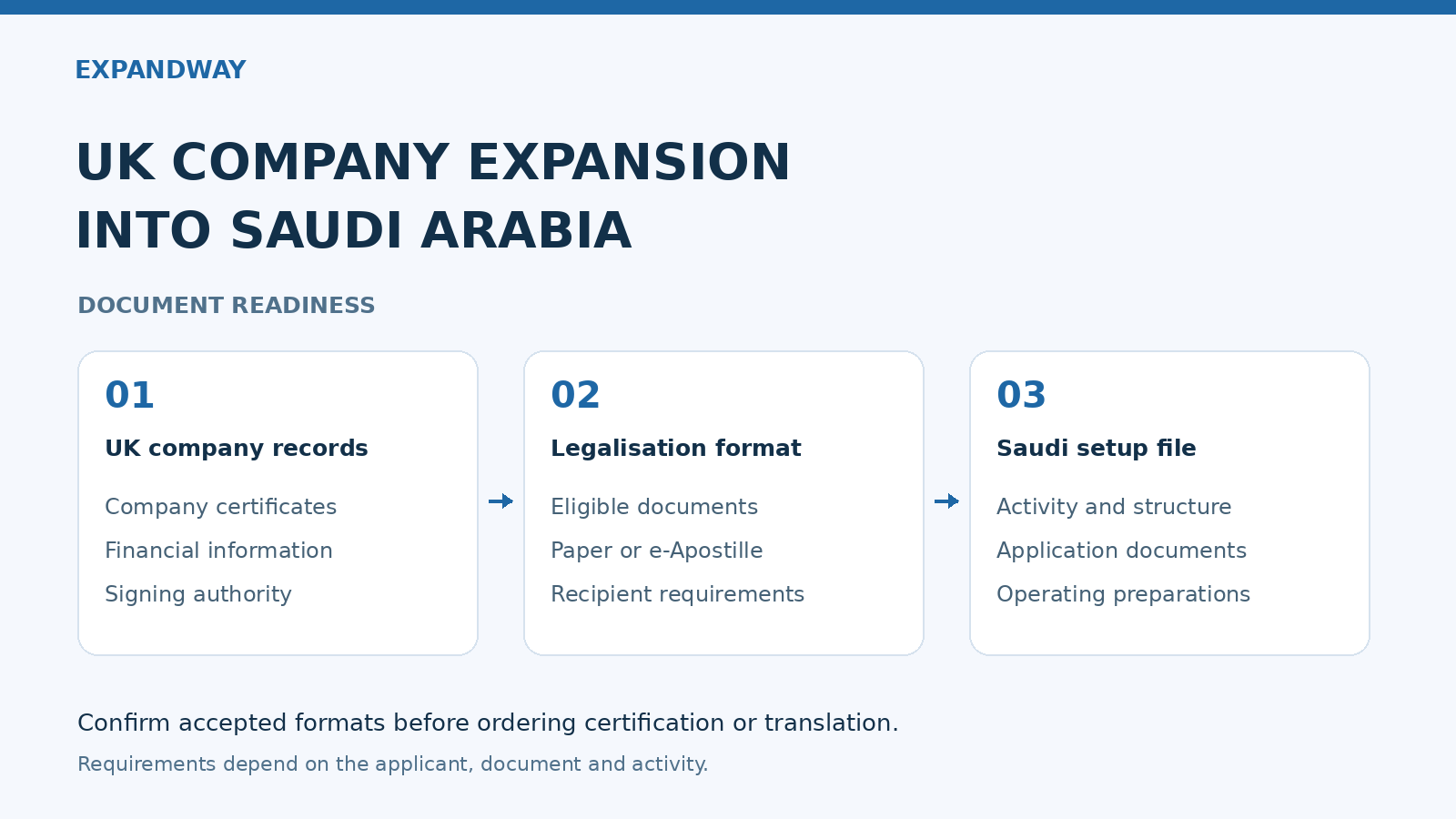
You can own the clinic outright through MISA. Indian-trained doctors are licensed the standard way DataFlow verifies your degree and NMC or state-council good standing, then you sit the Saudi Licensing Exam through Prometric unless exempt. Legalise corporate and personal documents (by apostille or the consular chain — confirm the current route) with certified Arabic translations, and remit investment capital under RBI/FEMA rules.
For Pakistani nationals
Full ownership is available, and Pakistani doctors follow the same SCFHS route, with DataFlow verifying PMDC/PMC registration. Documents are usually attested through the embassy or consular chain, and outward capital from Pakistan needs State Bank of Pakistan clearance, so start the transfer early. Pakistan already supplies many clinicians here but remember Saudization targets count Saudi nationals, not fellow expatriates.
For UAE-based healthcare groups
As a GCC-owned company you get national treatment: your profit share is taxed as 2.5% Zakat rather than corporate income tax, and capital moves freely across the GCC. Attestation by apostille is quick. Note that DHA- or DoH-licensed clinicians from the UAE still need a fresh SCFHS classification to practise in the Kingdom.
For US healthcare companies
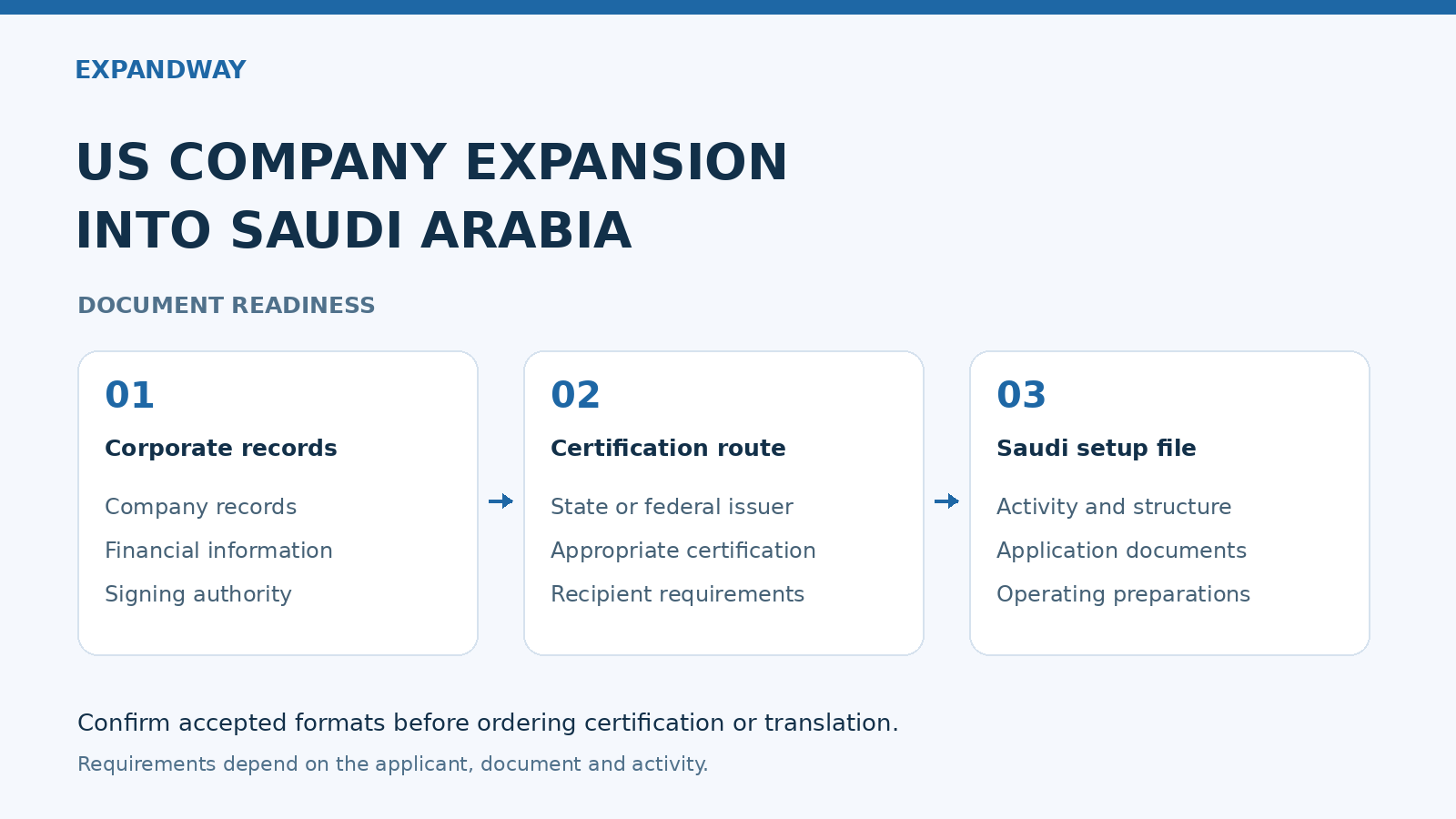
You can own a Saudi clinic 100% through MISA, and US board-certified physicians are often exempt from the Saudi Licensing Exam — a real speed advantage when you staff up. Apostille is the fast attestation route. US persons and companies still report worldwide income at home, and there is no US–Saudi tax treaty, so plan the tax side with an adviser.
Saudization (Nitaqat)
Like any employer, a clinic falls under Nitaqat, the Saudization programme run by the Ministry of Human Resources (MHRSD) on the Qiwa platform. You must hire a share of Saudi nationals — healthcare has its own localisation targets across clinical and administrative roles — and your Nitaqat band decides how smoothly work visas are processed. Budget for Saudi hires early and confirm your exact target with MHRSD/Qiwa or Expandway.
Open your clinic the right way
Now you know how to open a medical clinic in Saudi Arabia in 2026 — the wins come from picking the right MISA category, starting SCFHS licensing early, and clearing MOH, the municipality and CBAHI standards in the right order. Expandway handles the whole journey, from your business licence in Saudi Arabia to full business setup in Saudi Arabia. Book a free consultation with Expandway and we will map your specialties, licences and staffing before you sign a lease.
Frequently asked questions
How much does it cost to open a medical clinic in Saudi Arabia?
Licensing fees are modest an MOH medical-clinic licence is around SAR 1,000 and a MISA registration about SAR 2,000 a year, plus CR and municipal fees. The big costs are fit-out, medical equipment, rent and salaries, which vary widely by specialty. Confirm current figures with each authority or Expandway.
Can a foreigner own 100% of a medical clinic in Saudi Arabia?
Yes. Healthcare is open to full foreign ownership, so an investor can own a clinic outright through a MISA registration with no local partner. Confirm any conditions that apply to your specific activity.
What licences do I need to open a clinic?
A Commercial Registration, municipal site approval, and an MOH health-facility licence, plus SCFHS classification for every clinician and a MISA registration first if you are a foreign investor. CBAHI accreditation follows once you are operating and is needed to renew.
Do foreign doctors need a Saudi licence to practise?
Yes. Every doctor and nurse needs an SCFHS professional classification, obtained through Mumaris Plus with DataFlow verification and, for most, the Saudi Licensing Exam via Prometric. Board-certified doctors from some countries may be exempt from the exam.
How long does it take to open a clinic?
A foreign-owned clinic typically opens in about three to six months. The facility licence is quick; SCFHS licensing of your clinical staff and the fit-out usually set the timeline, so start both early.
Is CBAHI accreditation required for a clinic?
Yes. CBAHI accreditation is mandatory for healthcare facilities, including clinics. New facilities are surveyed after about 12 months of operation, and accreditation is required to renew your MOH licence.