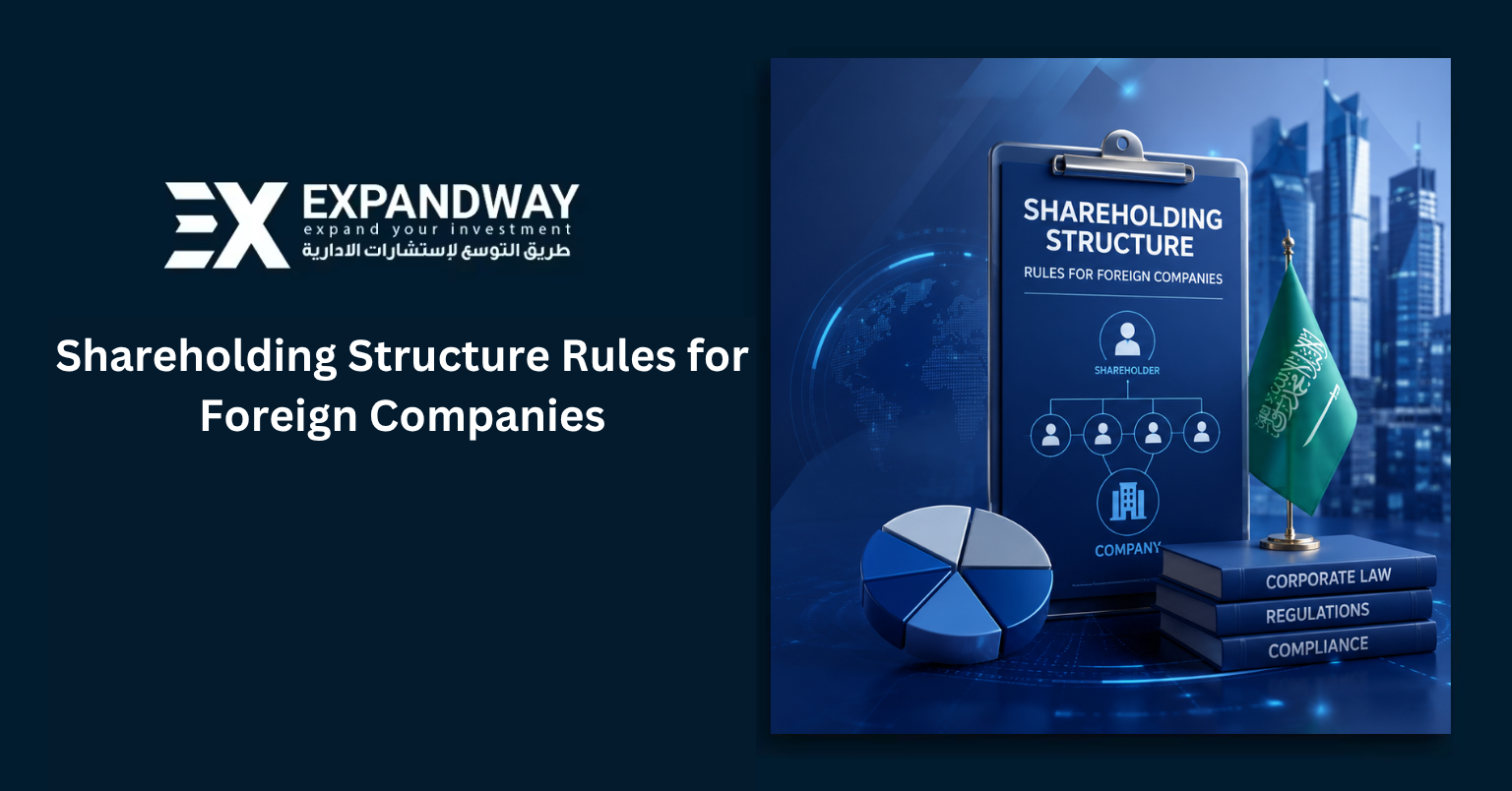
Foreign company shareholding rules in Pakistan generally allow international investors to own up to 100% of a locally incorporated company. However, ownership limits, licensing requirements, and regulatory approvals may apply in restricted sectors.
Pakistan generally permits foreign individuals and overseas companies to own up to 100% of a locally incorporated Pakistani company. Therefore, most foreign investors do not need to appoint a Pakistani shareholder or local equity partner.
However, foreign ownership is not completely unrestricted. Sector-specific regulations, licensing requirements, beneficial ownership disclosures and foreign exchange procedures can affect the final shareholding structure.
The Pakistan Investment Policy 2023 continues the country’s open-investment approach. It confirms that foreign investment is generally welcomed across the economy, while certain activities remain restricted for national security, public safety or regulatory reasons. The underlying policy framework removed general minimum capital and maximum foreign equity restrictions, except for specified sectors.
This guide explains the main shareholding structure rules for foreign companies in Pakistan, the available ownership models and the compliance issues investors should review before incorporation.
Important: This article provides general information and does not replace legal, tax, banking or sector-specific regulatory advice.
- 2026 Update: What Foreign Investors Should Know
- Can Foreigners Own 100% of a Company in Pakistan?
- General Rule for Foreign Shareholding in Pakistan
- Sectors Where Foreign Ownership May Be Restricted
- Prohibited Activities vs Regulated Activities
- Main Shareholding Structures for Foreign Investors
- 1. Wholly Foreign-Owned Company
- 2. Joint Venture With a Pakistani Partner
- 3. Pakistani Subsidiary of a Foreign Company
- 4. Branch Office
- 5. Liaison Office
- Branch Office vs Subsidiary: Which Is Better?
- SECP Incorporation Requirements for Foreign Shareholders
- Ultimate Beneficial Ownership Requirements
- Nominee Shareholders and Undisclosed Ownership
- Share Capital and Ownership Percentage
- Transfers of Shares to Foreign Investors
- Repatriation of Dividends, Profits and Capital
- Does Every Foreign-Owned Company Need BOI Approval?
- How to Choose the Right Shareholding Structure
- Common Shareholding Mistakes to Avoid
- Frequently Asked Questions
- Conclusion
- Call to Action
2026 Update: What Foreign Investors Should Know
Foreign investors should base their structure on the Pakistan Investment Policy 2023, the Companies Act 2017, the Companies Regulations 2024, sector-specific laws and State Bank of Pakistan foreign exchange requirements.
The Securities and Exchange Commission of Pakistan currently processes company incorporation through its digital eZfile system. SECP describes the incorporation process as an end-to-end digital procedure consisting of four principal steps. The Companies Regulations 2024 remain part of the current incorporation framework and were published by SECP in an updated version reviewed in 2026.
In another relevant 2026 development, the State Bank of Pakistan broadened eligibility for certain foreign currency and non-resident rupee accounts. Natural and legal persons qualifying as non-residents under Pakistan’s tax rules may now be eligible to maintain specified business and investment accounts, subject to banking and AML requirements.
Can Foreigners Own 100% of a Company in Pakistan?
Yes. In most sectors, a foreign individual, overseas company or group of foreign shareholders may own 100% of the equity in a company incorporated in Pakistan.
The Board of Investment states that there is generally no upper limit on foreign equity, apart from specified sectors such as airlines, banking, agriculture and media. BOI also confirms that there is no general minimum amount of foreign equity investment required across sectors.
As a result, a foreign investor may establish:
- A single-member company with one eligible foreign shareholder
- A private limited company with multiple foreign shareholders
- A Pakistani subsidiary owned by an overseas parent company
- A joint venture with Pakistani or foreign partners
A Pakistani nominee shareholder should not be added merely to create the appearance of local ownership. The actual ownership and control arrangement should be accurately disclosed to SECP, the company’s bank and any relevant regulator.
General Rule for Foreign Shareholding in Pakistan
The general starting point is:
Foreign investors may hold 100% of the shares unless the proposed business activity falls within a prohibited, restricted or specially regulated sector.
Pakistan’s Investment Policy 2023 states that the country maintains an open-admission policy for most foreign investment. Foreign investors generally enter through company registration under the Companies Act 2017 rather than through a universal pre-screening process.
Nevertheless, investors must distinguish between:
- General foreign ownership permission
- SECP company incorporation
- Sector-specific licensing
- Foreign exchange registration and banking documentation
- Beneficial ownership disclosure
- Tax and profit-repatriation compliance
Permission to own shares does not automatically grant permission to conduct every regulated activity.
Sectors Where Foreign Ownership May Be Restricted
Pakistan welcomes investment in most sectors. However, some industries are prohibited, restricted or subject to approval from specialised regulators.
Pakistan Investment Policy 2023 identifies activities that may be restricted for national security and public safety reasons. Examples include:
- Construction and operation of casinos
- Manufacturing of consumable alcohol
- Arms and ammunition
- Atomic energy
- High explosives
- Currency and minting
The policy also confirms that regulated sectors remain under the authority of their respective regulators. For example, banking is regulated by the State Bank of Pakistan, while insurance, non-bank finance, capital markets and several corporate financial activities fall under SECP supervision.
The Perplexity research document also highlights airlines, banking, agriculture and media as the principal sectors in which foreign equity limitations or local participation requirements may arise.
Airline and Civil Aviation
Foreign participation in aviation-related businesses may be subject to:
- Civil aviation licensing
- Ownership and control conditions
- Security clearances
- Limits imposed under aviation policies
- Requirements concerning Pakistani management or control
Investors should confirm the latest position with the Pakistan Airports Authority, Pakistan Civil Aviation Authority or other competent aviation regulator before finalising the share allocation.
Banking and Financial Services
Foreign investment in banking is regulated by the State Bank of Pakistan.
A foreign investor may need to satisfy requirements involving:
- SBP licensing
- Minimum capital
- Suitability and fit-and-proper tests
- Source-of-funds verification
- Approval of major shareholders
- Prior permission for acquisition or transfer of significant shareholding
Other financial activities, including insurance, non-bank finance, securities, asset management and private pensions, may require SECP approval.
Agriculture
Agricultural investment may be treated differently depending on the activity.
Factors can include:
- Corporate farming versus other agricultural activities
- Provincial land rules
- Leasehold or land-use restrictions
- Food-security considerations
- Water and environmental permissions
- Local licensing requirements
Investors should map the exact agricultural activity rather than relying on the general description “agriculture.”
Media and Broadcasting
Foreign participation in print media, television, broadcasting and other regulated communication services may be subject to equity and control restrictions.
Approval may be required from authorities such as:
- Pakistan Electronic Media Regulatory Authority
- Ministry of Information and Broadcasting
- Pakistan Telecommunication Authority, where relevant
- SECP
The permitted ownership percentage may depend on the licence category and nature of the media activity.
Prohibited Activities vs Regulated Activities
Foreign investors should not treat all restricted sectors in the same way.
A prohibited activity may not be open to ordinary private foreign investment.
A regulated activity may be available, but only after the investor satisfies conditions such as:
- Foreign equity limits
- Local partner participation
- Minimum capital requirements
- Security clearance
- Prior regulatory approval
- Licensing of directors or senior management
- Local incorporation
- Technical qualification requirements
Therefore, the company’s exact business objects and activity classification should be reviewed before incorporation.
Main Shareholding Structures for Foreign Investors
Foreign investors typically choose between a wholly foreign-owned company, a joint venture, a subsidiary, or a branch or liaison office.
The appropriate structure depends on ownership objectives, commercial activities, tax exposure, liability, profit repatriation and licensing requirements.
1. Wholly Foreign-Owned Company
A wholly foreign-owned company is a Pakistani-incorporated company in which foreign investors hold all issued shares.
The shareholders may include:
- One foreign individual
- Several foreign individuals
- One overseas corporate shareholder
- Multiple overseas companies
- A combination of foreign individuals and companies
This structure is commonly used in sectors such as:
- Information technology
- Software and business services
- Consultancy
- Trading
- Manufacturing
- E-commerce
- Professional support services
- Export-oriented businesses
The Perplexity document identifies a wholly foreign-owned company as the most common structure for services, technology, manufacturing and trading outside restricted sectors.
Advantages
- Full ownership and decision-making control
- No mandatory profit-sharing with a local shareholder
- Separate legal personality
- Limited liability for shareholders
- Ability to hire employees and enter contracts
- Clear structure for future investment or sale
- Better separation between the foreign parent and local operations
Potential Challenges
- Enhanced KYC and source-of-funds checks
- Attestation or legalisation of foreign documents
- Longer bank-account review
- Foreign exchange documentation
- Beneficial ownership reporting
- Sector-specific licensing
2. Joint Venture With a Pakistani Partner
A joint venture allows foreign and local investors to own shares in the same Pakistani company.
Possible ownership ratios include:
- 50:50
- 51:49
- 60:40
- 70:30
- Any other ratio permitted by the relevant law and regulator
A joint venture may be suitable when:
- The sector requires Pakistani participation
- A local partner has licences or technical capability
- Local distribution networks are important
- The business intends to compete for particular tenders
- Land access or operational relationships are essential
- The foreign investor wants to share market risk
The underlying research notes that a joint venture may be selected to enter restricted sectors, access local networks or satisfy tender conditions.
Essential Joint Venture Protections
The shareholders’ agreement should clearly address:
- Appointment and removal of directors
- Voting rights
- Reserved matters
- Capital contributions
- Additional funding
- Dividend policy
- Intellectual property ownership
- Non-compete obligations
- Related-party transactions
- Transfer of shares
- Right of first refusal
- Tag-along and drag-along rights
- Deadlock resolution
- Exit rights
- Dispute resolution
A 51% shareholding does not always provide complete operational control. The articles of association, board composition and reserved matters can substantially change how control is exercised.
3. Pakistani Subsidiary of a Foreign Company
A foreign parent company may establish a locally incorporated subsidiary and hold some or all of its shares.
The subsidiary:
- Has a separate legal identity
- Is incorporated with SECP
- Has its own share capital
- Can enter contracts in its own name
- Can maintain Pakistani bank accounts
- Is subject to Pakistani company and tax laws
- Limits the foreign parent’s liability in ordinary circumstances
For most long-term commercial operations, a subsidiary offers greater flexibility than a branch or liaison office.
Foreign Corporate Shareholder Requirements
Where an overseas company becomes a shareholder, SECP may require documents such as:
- Certificate of incorporation of the foreign company
- Constitutional documents
- Board resolution approving the investment
- Details of directors and authorised representatives
- Corporate profile
- Undertaking by the foreign subscriber
- Beneficial ownership details
- Attested or legalised documents, where required
SECP currently publishes separate forms and guidance for foreign directors, foreign subscribers and overseas corporate shareholders.
4. Branch Office
A branch office is an extension of the foreign parent company. It is not a separate company with its own shareholders.
Therefore, technically, a branch office has no independent shareholding structure. The foreign parent owns and controls the branch by definition.
The Board of Investment grants permission to foreign companies to establish branch offices in Pakistan. According to BOI guidance, a branch office is generally established to fulfil contractual obligations under an agreement with a public or private entity in Pakistan. Its activities remain limited to the approved contract, and it may not undertake unrestricted commercial or trading activities.
A branch may be considered when:
- The foreign company has secured a specific Pakistani contract
- Operations are limited to a defined project
- The company does not need a separately owned Pakistani subsidiary
- The parent accepts direct responsibility for branch liabilities
BOI permission is required, and the branch must also comply with SECP, FBR and SBP requirements.
5. Liaison Office
A liaison office is also an extension of the foreign parent and does not issue shares.
It may generally conduct non-commercial activities such as:
- Promoting the foreign company’s products
- Providing technical advice
- Exploring joint collaboration
- Conducting market research
- Supporting export promotion
- Building relationships with potential clients
A liaison office cannot normally earn local commercial revenue or conduct ordinary trading activities. BOI permission is required, and the approval is granted for a limited period that may be renewed.
Branch Office vs Subsidiary: Which Is Better?
| Factor | Pakistani Subsidiary | Branch Office |
| Separate legal entity | Yes | No |
| Has shareholders | Yes | No |
| Foreign ownership | Up to 100% in most sectors | Foreign parent controls it |
| Commercial flexibility | Generally broad, subject to licence | Limited to approved activities |
| Liability | Usually limited to subsidiary | Parent may be directly liable |
| BOI permission | Activity-dependent | Required |
| SECP registration | Incorporation required | Foreign-company registration applies |
| Best suited for | Long-term local operations | Specific contracts or projects |
A subsidiary is generally more suitable for ongoing sales, employment, trading and expansion. A branch is more appropriate for limited contractual work approved by BOI.
Suggested internal link:
[Branch Office vs Subsidiary in Pakistan: Complete Comparison]
SECP Incorporation Requirements for Foreign Shareholders
A company with foreign shareholders is incorporated under the Companies Act 2017 through SECP.
The first procedural step normally involves:
- Reserving the proposed company name
- Selecting the company type
- Preparing the memorandum and articles
- Entering shareholder and director details
- Uploading supporting documents
- Paying the incorporation fee
- Responding to any SECP observations
SECP confirms that a private company may be formed by two or more persons, while a single-member company may be formed by one member. Its current registration process operates through eZfile under the Companies Regulations 2024.
Documents for Foreign Individual Shareholders
Requirements may include:
- Valid passport
- Recent photograph
- Foreign residential address
- Email address and contact details
- Undertaking for foreign subscriber or director
- Biographical information
- Proposed shareholding percentage
- Source-of-funds information
- Power of attorney, where applicable
- Attestation or legalisation, if requested
Documents for Foreign Corporate Shareholders
Requirements may include:
- Certificate of incorporation
- Memorandum, articles or equivalent constitutional documents
- Board resolution approving the Pakistani investment
- Board resolution appointing an authorised representative
- Registered-office evidence
- List of directors
- Shareholding structure of the foreign parent
- Ultimate beneficial ownership information
- Passport details of relevant individuals
- Corporate undertaking
- Certified translations for documents not issued in English
The exact documentation can differ based on the shareholder’s country, corporate chain and the nature of the proposed business.
Ultimate Beneficial Ownership Requirements
Foreign shareholding does not remove the obligation to identify the natural persons who ultimately own or control the company.
Pakistani companies must maintain beneficial ownership records and complete applicable SECP filings. The underlying research also highlights Pakistan’s increasing focus on beneficial ownership transparency under AML and international compliance standards.
SECP guidance generally applies the UBO framework where a legal person holds at least 10% ownership or control and requires companies to identify the relevant natural persons behind the legal entity.
A company should be prepared to disclose:
- Full name of the ultimate beneficial owner
- Nationality
- Passport or identity information
- Residential address
- Date of birth
- Percentage of ownership
- Nature of control
- Intermediate holding companies
- Supporting ownership documents
Complex offshore ownership chains may require additional review by SECP, the bank and sector regulators.
Nominee Shareholders and Undisclosed Ownership
Using a nominee does not eliminate beneficial ownership disclosure.
Investors should avoid structures designed to:
- Conceal the true owner
- Avoid a sectoral ownership cap
- Misrepresent local participation
- Bypass source-of-funds checks
- Circumvent sanctions or AML controls
- Transfer control without regulatory approval
Any nominee arrangement should be legally documented, commercially justified and fully disclosed where required.
Share Capital and Ownership Percentage
A shareholder’s ownership percentage is normally calculated using the number of shares held compared with the company’s total issued shares.
For example:
- Foreign Parent Company: 7,000 shares
- Pakistani Partner: 3,000 shares
- Total issued shares: 10,000
The foreign parent owns 70%, while the Pakistani partner owns 30%.
However, economic ownership should not be considered in isolation. Investors must also examine:
- Voting rights
- Preference shares
- Director appointment rights
- Veto rights
- Conversion rights
- Dividend preferences
- Options and warrants
- Shareholders’ agreement restrictions
A minority shareholder may hold strong negative-control rights through reserved matters. Similarly, a majority shareholder may face practical restrictions if important decisions require unanimous approval.
Transfers of Shares to Foreign Investors
A company may issue new shares to a foreign investor or transfer existing shares from a resident shareholder to a non-resident.
The process may involve:
- Board or shareholder approval
- Compliance with the articles of association
- Share purchase agreement
- Valuation documentation
- SECP filings
- Tax review
- Registration of securities through an authorised bank
- Regulatory approval for a licensed sector
- Competition clearance for qualifying transactions
SBP guidance requires banks to conduct due diligence for securities issued or transferred to non-residents. Documentation may include the share purchase agreement, foreign investor profile, incorporation documents, audited financial statements, directors’ information and beneficial ownership details.
Foreign investors should route investment funds through properly documented banking channels to preserve their ability to repatriate dividends and sale proceeds.
Repatriation of Dividends, Profits and Capital
Foreign shareholders may generally repatriate:
- Dividends
- Capital
- Sale proceeds
- Disinvestment proceeds
- Approved royalties
- Technical service fees
- Franchise fees
- Other eligible payments
Pakistan Investment Policy 2023 states that foreign investors may repatriate capital, profits, dividends and other funds in the investment currency or another freely usable currency. However, repatriation remains subject to SBP foreign exchange regulations and the Companies Act 2017.
The Perplexity document similarly confirms that dividends, capital and sale proceeds may generally be repatriated through banking channels, subject to documentation and SBP requirements.
Documents Commonly Required for Dividend Repatriation
The designated bank may request:
- Audited financial statements
- Dividend declaration
- Board or shareholder resolution
- Evidence of applicable tax payment
- Shareholding records
- Proof of original foreign investment
- Registration of shares on a repatriable basis
- SECP corporate filings
- Bank forms and declarations
Repatriation is a procedural right, not an automatic bank transfer. Poor documentation at the investment stage can cause delays when the investor later seeks to remit profits or sale proceeds.
Does Every Foreign-Owned Company Need BOI Approval?
Not necessarily.
For an ordinary company operating in a generally open sector, incorporation takes place through SECP. The Pakistan Investment Policy describes foreign investment entry primarily through corporate registration under the Companies Act 2017.
However, separate BOI or regulatory involvement may apply when:
- Establishing a branch office
- Establishing a liaison office
- Entering a restricted or sensitive sector
- Applying for investment incentives
- Operating within a special economic zone
- Seeking investor facilitation or work-visa support
- Complying with a specific approval condition
BOI permission is mandatory for branch and liaison offices. Local subsidiaries should separately confirm whether their activity requires a licence or approval from another regulator.
How to Choose the Right Shareholding Structure
Before deciding on ownership percentages, foreign investors should complete the following review.
Step 1: Define the Exact Business Activity
Avoid broad descriptions such as “consultancy,” “media,” “finance” or “agriculture.”
Instead, identify:
- The exact products or services
- How revenue will be generated
- Whether goods will be imported or exported
- Whether the business will hold customer funds
- Whether it will own or lease land
- Whether technical licences are required
Step 2: Confirm Whether the Sector Is Open
Review the proposed activity against:
- Pakistan Investment Policy 2023
- BOI sector guidance
- SECP requirements
- SBP rules
- Provincial laws
- Relevant licensing authority rules
Step 3: Select the Legal Form
Choose between:
- Single-member company
- Private limited company
- Public company
- Joint venture
- Subsidiary
- Branch office
- Liaison office
- Limited liability partnership, where suitable
Step 4: Design Ownership and Control
Decide:
- Shareholding percentages
- Board composition
- Voting thresholds
- Reserved matters
- Funding obligations
- Dividend rights
- Exit mechanisms
- Intellectual property ownership
Step 5: Prepare Foreign Shareholder Documents
Gather and legalise the required individual or corporate documents before filing.
Step 6: Establish the Banking Route
Select a bank experienced in:
- Foreign direct investment
- Non-resident shareholders
- Registration of securities
- Dividend remittances
- Disinvestment proceeds
Step 7: Complete Post-Incorporation Compliance
After incorporation, complete applicable:
- Tax registration
- Bank-account opening
- Share issuance
- Beneficial ownership records
- Sector licences
- Employment registrations
- Foreign exchange documentation
Common Shareholding Mistakes to Avoid
Choosing a Local Partner Without a Shareholders’ Agreement
A verbal understanding provides limited protection when disputes arise.
Using the Wrong Business Activity
An inaccurate business object can create licensing, banking and tax complications.
Focusing Only on Share Percentage
Ownership, voting control and board control are different concepts.
Ignoring Beneficial Ownership Rules
SECP and banks may require details of the natural persons behind every corporate shareholder.
Sending Investment Funds Informally
Funds should enter Pakistan through properly documented banking channels.
Assuming 100% Ownership Means No Approval Is Required
Ownership may be allowed while the underlying activity remains licensed or restricted.
Using a Liaison Office for Commercial Sales
A liaison office cannot normally conduct revenue-generating commercial activities.
Ignoring Exit and Repatriation Planning
The investment should be structured from the beginning to support future dividend and sale-proceeds remittance.
Frequently Asked Questions
Can a foreigner own 100% of a Pakistani company?
Yes. Foreign investors may generally own 100% of a Pakistani-incorporated company in most sectors. Exceptions and additional conditions apply to prohibited, restricted and regulated activities.
Is a Pakistani shareholder mandatory?
No. A local shareholder is generally not mandatory unless a particular sector, licence, tender or regulatory condition requires local participation.
Can one foreign person register a company in Pakistan?
A single foreign investor may potentially establish a single-member company, subject to SECP requirements and the eligibility of directors and officers.
Can a foreign company become the shareholder?
Yes. An overseas body corporate may hold shares in a Pakistani company. It must provide corporate, ownership, authority and beneficial ownership documents.
What is the best structure for a foreign investor?
A wholly foreign-owned private limited subsidiary is often suitable for long-term commercial operations. However, a joint venture may be preferable where local expertise or regulated-sector participation is required.
Does a branch office have shareholders?
No. A branch office is part of the foreign parent company and does not have a separate shareholding structure.
Can foreign shareholders repatriate dividends?
Yes, generally. Repatriation must follow SBP foreign exchange rules, tax requirements and banking documentation procedures.
Are foreign shareholders required to visit Pakistan?
Not always. Many incorporation steps can be completed digitally or through an authorised representative. Nevertheless, bank KYC, document attestation or sector licensing may require additional involvement.
Is there a minimum foreign investment amount?
BOI states that there is generally no minimum foreign equity investment requirement across sectors. However, minimum capital may apply to regulated businesses such as financial institutions, insurance providers or other licensed entities.
Conclusion
Pakistan offers a comparatively open ownership regime for international investors. In most industries, foreigners may establish a company with 100% foreign shareholding and without appointing a Pakistani equity partner.
Nevertheless, the shareholding percentage is only one element of the structure.
Before incorporation, investors should confirm:
- Whether the exact activity is open to foreign investment
- Whether a foreign equity cap applies
- Which regulator has jurisdiction
- Whether a local partner is legally or commercially necessary
- How voting and board control will operate
- Which beneficial ownership disclosures are required
- How investment funds and future profits will move through banking channels
A carefully planned structure can protect ownership rights, simplify licensing and support future profit repatriation. A poorly designed structure can cause delays, shareholder disputes and regulatory complications.
Call to Action
Planning to establish a foreign-owned company in Pakistan?
Our business setup specialists can help you evaluate the permitted foreign ownership percentage, select the right legal structure, prepare shareholder documentation and coordinate the SECP, BOI and regulatory process.
[Contact our foreign company formation team] for a tailored assessment of your sector, ownership model and licensing requirements.